

Choosing the right shower seat is important for your comfort and safety, as well as taking into consideration your personal preference and design style.
Below, we will list the different types of shower seats and their advantages and disadvantages to help you make an informed choice when choosing your new shower seat
Types of Shower Seats Available
1. Standard Shower Stool
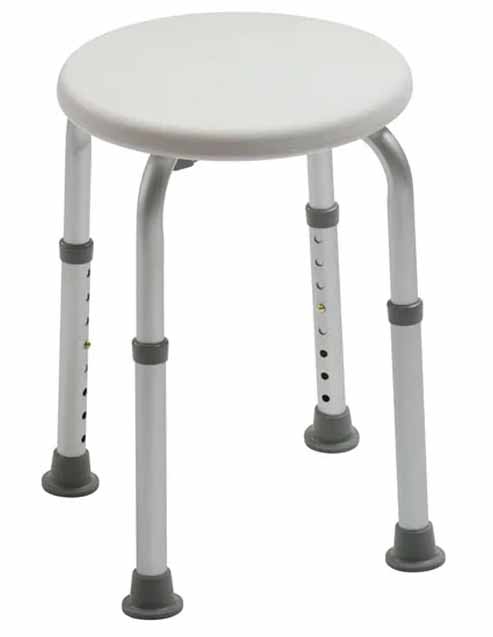
A shower stool is a freestanding stool you place in the shower. They come in different sizes and allow you to sit down and rest while taking a shower
Advantages of a Standard Shower Stool
- Freestanding – A shower stool is not fixed onto the shower wall, so you can shift it according to your preferences.
- Suitable for balance issues – They keep you stable if you struggle to balance in the shower or are conscious of slipping.
- Budget-friendly – Stools are ideal if you’re on a budget or don’t want to invest too much in a shower seat.
- Ideal for mobility restrictions – They reduce the distance you need to move, minimising pain when washing.
- Gives you a resting place – Perhaps you enjoy standing to shower but get tired after a few minutes. A shower stool allows you to take breaks as regularly as you want.
Disadvantages of a Standard Shower Stool
- Less stable than fixed shower seats – It may shift because a stool is not attached to the wall or floor. However, they do have rubber soles to increase stability.
- Lack of adjustments – Shower stools are typically set at a fixed height and don’t always offer height adjustments. Therefore, you may struggle to sit comfortably if the stool is too low or too high.
- Not suitable for everyone – A standard shower stool is usually one-size-fits-all, so they don’t cater to every body type, mobility issues or age.
- No back support – Unlike shower chairs, a stool has no back. Therefore, if you need comfort and stability for your spine, you may be better off choosing a different option
2. Standard Shower Chair
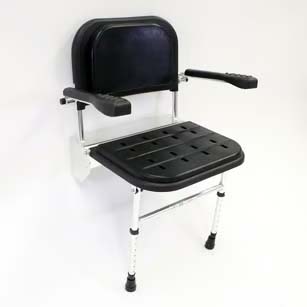
A standard shower chair is similar to a stool but with a back. Some types come with armrests or stability support.
Advantages of a Standard Shower Chair
- Moveable – You can move shower chairs to different positions and take them out of your walk-in shower for use in another area of your bathroom.
- Back support – If sitting upright on a stool is too difficult, a chair will ease the strain on your spine.
- Provides stability – A shower chair supports your posture and balance, so you don’t need to worry about falling.
- Helps reduce pain from mobility restrictions – Standing to shower or maintaining your posture on a stool may cause pain. However, a shower chair gives you the independence to sit comfortably
- Armrest support – The armrests on shower chairs are helpful to lean on when lowering or lifting yourself from the chair.
Disadvantages of a Standard Shower Chair
- Restricted movement – A fixed shower chair’s back and arms may limit your movements and ability to shower in your preferred position.
- Not always suitable if you struggle to sit from standing – If you have mobility issues that make it painful or challenging to sit down or stand up, you may prefer a seat that caters to your height and movement restrictions. However, some shower chairs offer adjustable seating.
- Less stable than fixed seating – Because shower chairs are freestanding, they may tip if you lean on them too heavily.
- Take up space – Shower chairs can be bulky and take up more surface area than a shower stool.
3. Folding or Hanging Shower Chair
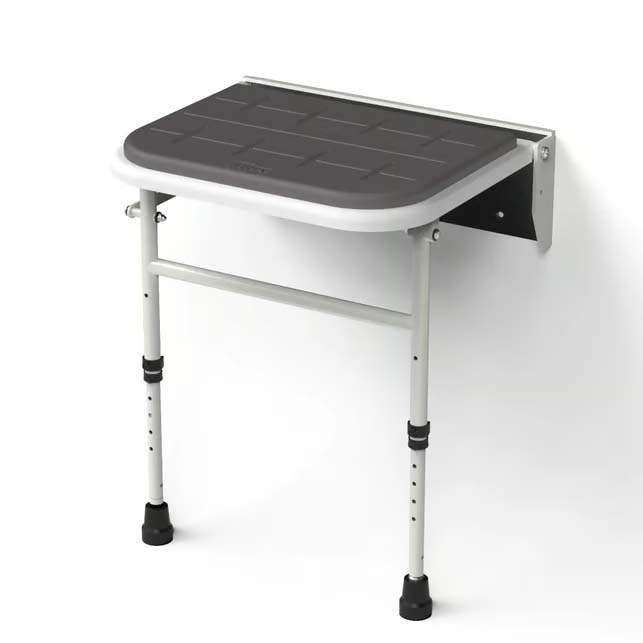
A folding or hanging shower seat fixes onto the shower wall or is hooked over a grab rail. They come in many different types, shapes and designs, providing rest and stability when showering
Advantages of a Folding or Hanging Shower Seat
- Stable – Because a folding or hanging chair is mounted to a permanent fixture, they do not tip or move when in use.
- Space-saving – Folding shower chairs are a good option if you have a small walk-in shower or you don’t want f bulky shower chair.
- Useful if you don’t want to sit directly under the shower – A folding or hanging chair allows you to sit and shower without being under running water.
- Can be placed to your ideal height – During installation, you can place a folding or hanging chair at the best height for you.
Disadvantages of a Folding or Hanging Shower Chair
- Permanent – A hanging or folding shower chair requires a fixture on your shower wall. Therefore, they may not be suitable if you rent or plan to sell your house.
- No armrests – The lack of armrests can make the chair difficult for anyone who needs support getting up and down.
4. Rolling Shower Chair
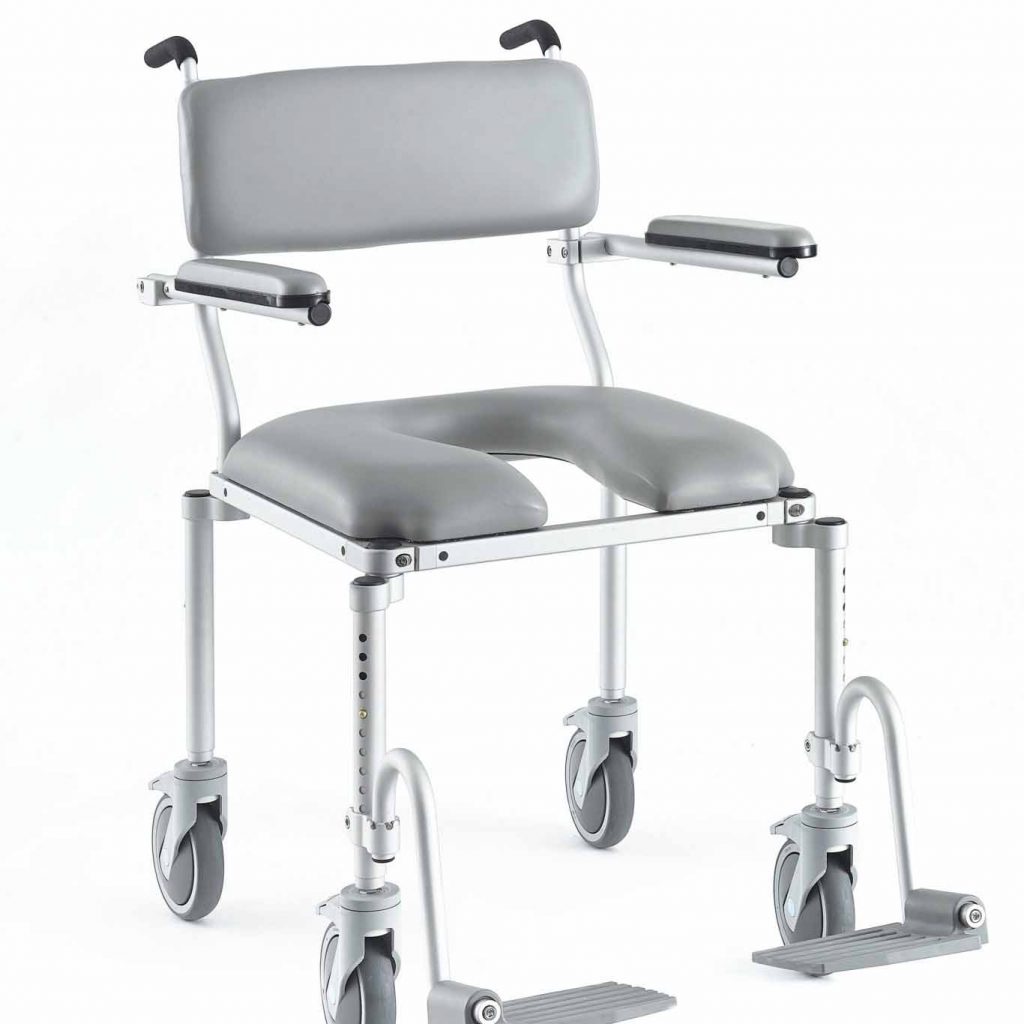
A rolling shower chair has wheels on the bottom, so you can roll the chair in and out of a walk-in shower. Some rolling shower chairs have adjustable seats and armrests.
Advantages of a Rolling Shower Chair
- Ideal for low mobility – Rolling chairs for disability showers work well when the individual has little to no mobility.
- Provides independence – For people who use wheelchairs, rolling shower chairs allow them to enter and exit a walk-in shower independently.
- Easy transition – There is no need to get up from one place and move into the shower. Instead, the chair can roll straight in.
Disadvantages of a Rolling Shower Chair
- Less stable than a fixture – Although the wheels provide an easy transition, it is less stable than a fixed shower seat.
- May have limited adjustments – Depending on the quality of the rolling shower chair, it may have few adjustments for comfort and practicality.
5. Transfer Bench
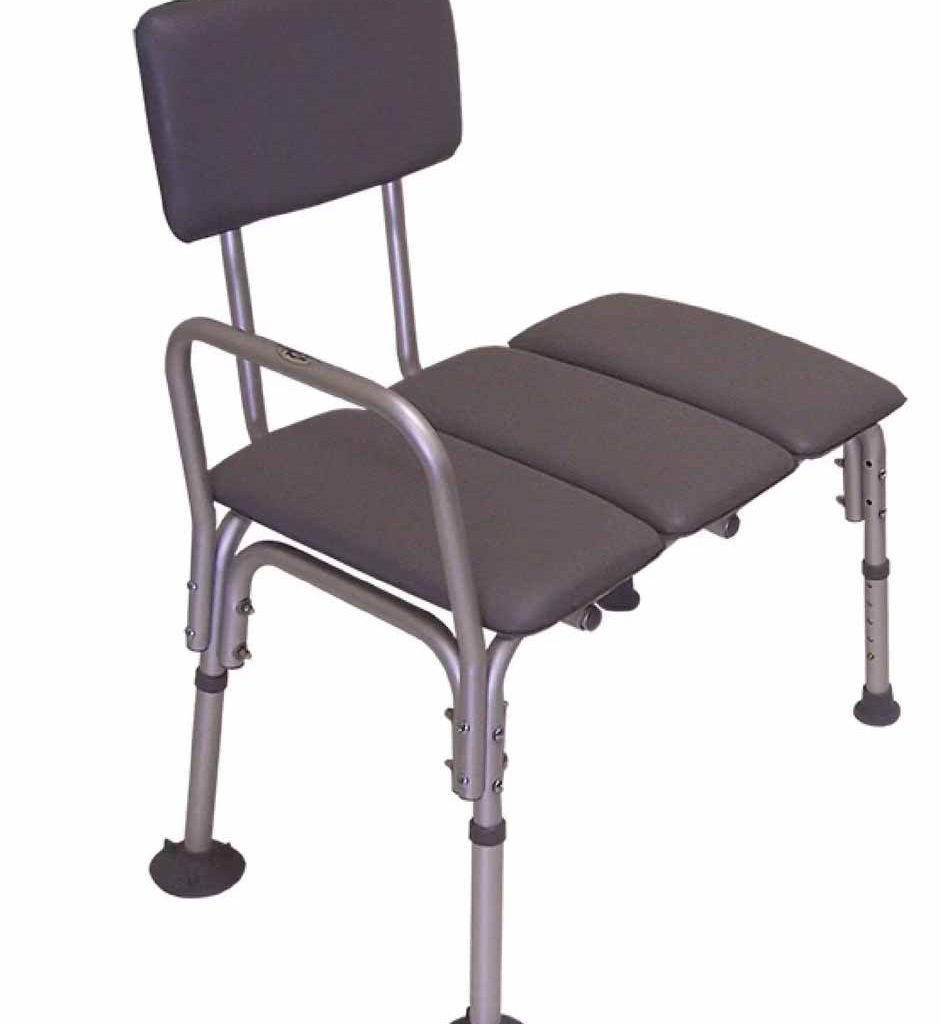
A transfer bench is long and usually has an inbuilt chair on one end. Half of the bench stands outside the walk-in shower, while the other side extends into the shower.
Advantages of a Transfer Bench
- Less risk of slipping – Thyere is no need to step onto the shower floor but you can sit outside and slide into the shower.
- Easy transition – A person can sit on the outside and move across into the shower without having to get up or down.
- Simple to use – You can place transfer benches directly into the walk-in shower without fixing them to the shower wall.
Disadvantages of a Transfer Bench
- No grab rails – Although some transfer benches have a grab rail at one end, they do not have them all the way across.
- Needs some mobility – A person will need to hold themselves and move across the bench into the walk-in shower.
- Takes up space – Transfer benches take up more space than stools and folding chairs, so they are unsuitable for small bathrooms.
Which Shower Seat is Right for You?
It is essential to choose a seat that meets one’s own independence needs and criteria. Below is the complete list of walk-in shower seats that suit different mobility, pain or disability challenges
Shower Stool
Best if you have mild mobility or balance issues and want a non-permanent place to rest while showering.
Shower Chair
Best if you require back support and armrests to help you sit or stand. You can also use a shower chair for the elderly if they still have mobility but get tired easily.
Folding or Hanging Shower Chair
Best if you have a small shower or don’t want a shower chair to take up space. They’re good if you struggle with mild pain and mobility or have balance restrictions.
Rolling Shower Chair
Best for little to no mobility or for anyone who finds it painful to get up and down. A rolling shower chair is also handy for carers to easily transfer you in and out of the shower.
Transfer Bench
Best for someone who struggles with balance and would prefer not to step onto the shower floor. Also, useful if you have restricted mobility going from standing to sitting and vice versa.
With the right walk-in shower seat, showers don’t need to be difficult to manage. Select the seat that suits your needs so you can comfortably and safely enjoy your shower. Our friendly team are always on hand to answer any questions and advise you on the best product for your individual requirements. You can contact us on 03301335270, email: [email protected], speak to our customer service using the Chatbot at the bottom of the page or contact us using the form below.
If you would like a printed version of this article, you can download it for free from our ‘Helpful Guides‘ section, where you can also find guidance on other aspects of planning for a mobility bathroom or shower room