



At Mobility Showers, we design bathrooms that make everyday living safer, easier, and more comfortable. One of the simplest ways to improve safety in the shower is by choosing the right shower seat — but with so many options available, it can be hard to know which style suits your needs best.
Here’s a breakdown of the main types of shower seats we recommend, along with their pros, cons, and who they’re best suited for
.1. Shower Stools
A compact, freestanding seat that can be placed anywhere in the shower.
Pros
Lightweight and easy to move
Fits well in smaller shower areas
Affordable entry‑level option
Ideal for people who only need occasional support
Cons
No back or arm support
Can feel less stable than fixed seating
Not ideal for long periods of sitting
Best for: Customers with mild balance issues or those who simply want a little extra stability without committing to a fixed installation.
2. Shower Chairs
A sturdier option with a supportive backrest and sometimes armrests.
Pros
Comfortable for longer showers
Armrests make sitting and standing easier
More stable than a stool
Still fully portable
Cons
Takes up more space
Can be awkward in narrow cubicles
Still not as secure as a wall‑mounted seat
Best for: Anyone who needs reliable support and comfort but prefers a portable, non‑permanent solution.
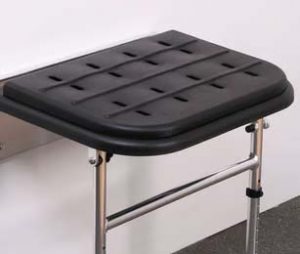
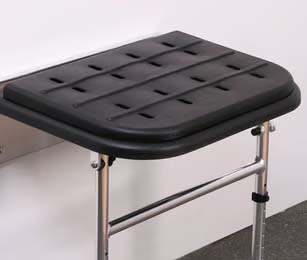
3. Wall‑Mounted Folding Seats
A fixed seat that folds neatly against the wall when not in use — a popular choice in Mobility Showers installations.
Pros
Extremely stable and secure
Space‑saving design
Installed at the perfect height for the user
Creates a clean, modern look
Cons
Requires installation
Not ideal for renters without permission
Armrests are optional rather than standard
Best for: Regular use, small bathrooms, and customers who want a long‑term, safe, and stylish solution.
4. Rolling Shower Chairs
A wheeled chair that can be moved directly into the shower area.
Pros
Excellent for people with very limited mobility
Smooth transition from bathroom to shower
Brakes add stability
Some models double as commodes
Cons
Requires enough space to manoeuvre
Wheels can reduce stability if brakes aren’t used
Higher cost than basic seating
Best for: Wheelchair users or anyone who struggles with transfers and needs maximum support.
5. Transfer Benches
A long bench that sits partly inside and partly outside the shower, allowing the user to slide in safely.
Pros
Removes the need to step over the shower edge
Greatly reduces slipping risk
No installation required
Ideal for people with limited leg strength
Cons
Takes up more room than other options
Not suitable for very small bathrooms
Requires the ability to slide across the bench
Best for: Customers who find stepping into the shower difficult or unsafe.
 Share: